Context
Thailand is a vibrant country situated in Southeast Asia, encompassing roughly the same land area as France or Sweden. Home to around 70.1 million people, it's renowned for its picturesque beaches, captivating ruins and temples, and delectable local cuisine. Located just north of the equator, Thailand has a tropical climate that's heavily influenced by seasonal monsoon winds. Its annual average temperature has increased by 0.8°? per century since the mid-20th Century.
Since the Industrial Revolution's transition to new manufacturing processes in the middle of the 18th Century, fossil fuels have become the primary source of electricity for many countries around the world. As a result, many countries are heavily invested in fossil fuel extraction, with established infrastructure and systems dedicated to their use. Despite a steady decrease in its share of primary energy from fossil fuels since 2010, Thailand still relied on them for almost 93% of its energy needs in 2021 - with gas and coal accounting for 64% and 24%, respectively, and only 7% coming from renewable sources.
The Thai economy is heavily dependent on tourism which contributes about 5.6% to its GDP and is one of its major employment sectors as well. But with an ever-increasing influx of tourists and other urbanisation developments, there's an ongoing tension between development needs and nature preservation across the country. Particularly prominent are Thailand's coastal areas, which boast rich aquatic ecosystems and diverse marine flora and fauna that support both local livelihoods as well as mass tourism - although they're weakened by unsustainable aquaculture practices, overfishing issues, unregulated coastal growths and pollution threats due to climate change factors such as sea level rise or extreme weather events caused by global warming.
That's why projects aiming at supporting Thailand’s shift towards renewable energy sources such as wind power can be so beneficial: not only could they reduce the country’s reliance on coal or gas but also contribute significantly to cleaner air quality along with fostering job creation within a developing green economy - ultimately leading towards a future free from fossil fuels use altogether!
How Wind Power Can Change the Future of Thailand
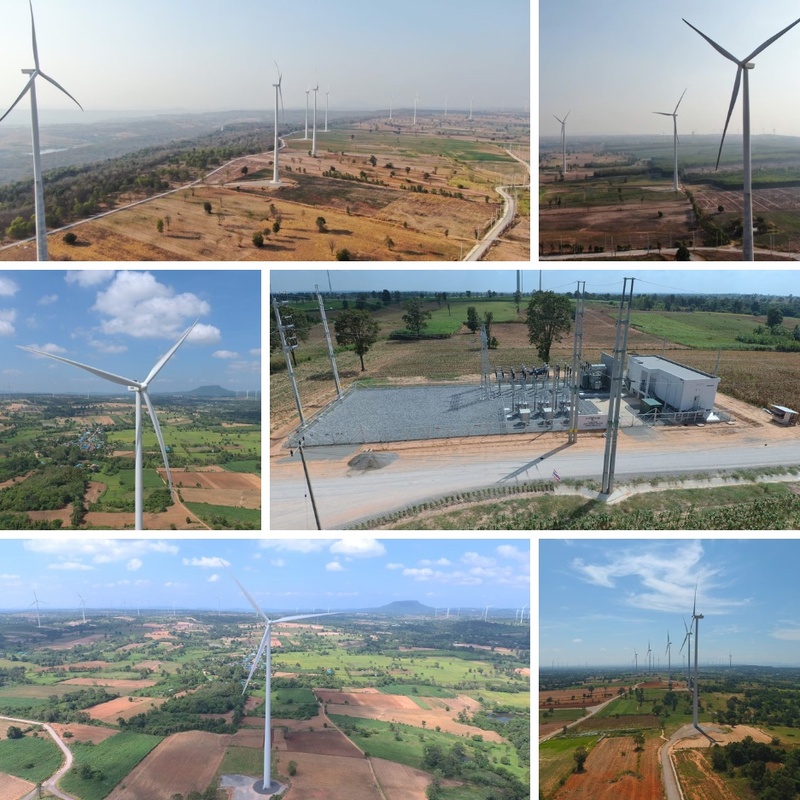
This project in the Nongwang, Bueng Prue and Samnaktakhro sub-districts of Thepharak District, Nakhonratchasima Province in Thailand, is set to make a major contribution in terms of environmental protection. Through the implementation of 90 megawatts (MW) of wind power from 30 Wind Turbine Generators (WTGs), each with an individual capacity of 3 MW, the project is estimated to avoid 131,883 tonnes of carbon dioxide equivalent (tCO2e) entering our atmosphere each year over its 25-year lifespan - equating to a grand total of 1,318,830 tCO2e saved!
The project began in 2018 and has been designed to produce renewable energy that will be exported to the Thailand National Grid and displace electricity generated from fossil fuel sources. In turn, this will help reduce GHG emissions associated with electricity generation. As well as contributing to reducing air pollution, this project offers other economic and social benefits, such as creating employment opportunities for local people during the construction and operational phases. This will help increase local income levels as well as develop infrastructure within the region.
The development of clean energy projects like this one helps ensure that future generations can benefit from sustainably produced energy that does not contribute to global warming or negatively impacts human health. Investing in renewable energy sources can create a more secure environment for everyone by minimising our reliance on finite resources such as oil, coal and gas – reducing our vulnerability against volatile commodity market prices.
As well as preventing harmful emissions from entering our atmosphere, this project is also helping us transition into a more sustainable future by providing clean electrical energy that can be used safely without damaging our planet’s delicate ecosystems or increasing global temperatures. Using natural sources such as wind power ensures that we can achieve greater prosperity without compromising nature’s finite resources or irreversibly harming the environment.
Verification
This project is verified by the Verified Carbon Standard. You can view it on the Verra Registry here and here.